Why I moved away from Google Photos and built a self-hosted photo server on a student budget using old hardware and Immich.
From Google Photos to Self-Hosted: Reclaiming Control on a Student Budget
Photos and videos are some of the most personal digital things we own, not in the abstract “data is valuable” sense, but in a deeply human way. They preserve memories, relationships, places, and moments that often cannot be recreated. A random blurry shot from years ago can become more precious than anything you intentionally tried to preserve.
Yet most of us casually hand all of that to giant cloud platforms without thinking twice. Because they’re convenient. Because they work. Because “free” is a persuasive word, especially when the cost is hidden behind convenience rather than shown upfront.
Then I started asking myself a question that refused to leave my head: do I actually want a giant corporation storing my entire personal photo archive?
That question became harder to ignore as AI became inescapable. Everything now feels scraped, indexed, classified, and turned into training data for something bigger. Whether that’s directly happening with personal photos isn’t even the only concern. The bigger issue for me became ownership: who controls my photos? Who decides what happens to them? And if the answer isn’t me, why am I comfortable with that?
That line of thought eventually pushed me to move my entire library off Google Photos.
Prefer watching over reading? I turned this whole rant into a video. Click the thumbnail below to watch it on YouTube (it’s the same content, just in spoken form).
The Storage Trap
Storage was the first reason I looked elsewhere, but it quickly stopped being the most important one.
Google gives you 15GB of free storage, shared across Photos, Drive, and Gmail. Your photos compete with PDFs, assignments, ZIP files, screenshots, email attachments, and whatever cursed folder you forgot existed. Modern phones crank out huge files (high-res photos, 4K video, burst shots, RAW), so 15GB vanishes faster than most people expect.
The obvious fix is Google One: pay monthly, get more storage, move on. The pricing isn’t outrageous. But I’m a student, and subscriptions are sneaky: individually they never feel expensive, but stack enough and your monthly expenses start looking like a badly optimized Docker container eating RAM for no reason.
So yes, money mattered. But it wasn’t the real reason I left.
The Trust Problem
Trust was.
Google’s policy says that if your account stays inactive for two years, your photos and videos may be deleted. They send warnings and give you time, so this isn’t a “Google is evil” argument. The thing that bothered me was simpler: if another entity can decide whether your data continues to exist, are you actually in control of that data?
That question gets uncomfortable when you stop treating it as hypothetical. Imagine someone close to you dies. Their entire photo archive lives inside a Google account. Family members try to recover access but fail verification because account recovery is deliberately strict. No recovery email, no backup codes, no password. Now what? Some of the most meaningful memories may become effectively inaccessible forever.
That thought genuinely bothered me. Cloud storage stopped feeling permanent; it started feeling conditional. Access became permission. Ownership became blurry.
The Privacy Rabbit Hole
Then there’s privacy, its own rabbit hole. In 2019, Google was fined €50 million by France’s CNIL for GDPR violations. What stood out wasn’t just the fine but the reasoning: information about data collection and ad personalisation was scattered across multiple documents, making it hard for users to actually understand what they were agreeing to. That feels like the real issue with modern consent systems: the opacity often feels intentional. Not malicious, just practical. Once something becomes annoying enough to understand, most people stop trying. You click accept, move on, and tell yourself you’ll read it later. Nobody reads it later.
Now add AI. When you upload data today, what exactly are you consenting to? Ads? Analytics? Product improvement? Future products that don’t even exist yet? I’m not arguing every company is evil; I’m saying I don’t like giving away control when I don’t fully understand the tradeoff.
”The Cloud Is Safe” Is a Myth
Another thing people say too casually: “It’s in the cloud, so it’s safe.” No. Cloud doesn’t eliminate risk; it just changes where the risk lives. Your files still sit on physical machines that fail, humans who make mistakes, and systems that break. A good example: the 2024 UniSuper incident where Google Cloud accidentally deleted an entire customer environment due to an internal provisioning mistake. Not a tiny startup: Google. If even that level of engineering can fail catastrophically, centralisation doesn’t magically remove risk; it just changes who handles recovery.
The Self-Hosting Solution
So I did what every sane computer science student does when mildly annoyed by a cloud platform: I started self-hosting.
My setup is not impressive: no fancy NAS, no rack server, no homelab YouTuber RGB nonsense. My photo server is literally an old sixth‑generation Intel i5 laptop I had lying around: 8GB RAM, a 256GB SSD, and a 1TB external drive for backups.
The software doing the heavy lifting is Immich, one of the most impressive open‑source projects I’ve used recently. It handles automatic phone backups, albums, timeline browsing, search, memories, and even face recognition, basically all the features people actually use Google Photos for. And it feels absurdly polished for something that’s free and open source. That part surprised me most; I never felt like I was dramatically downgrading; if anything, I felt like I was reclaiming ownership without sacrificing too much convenience.
The Tradeoffs
That doesn’t mean self‑hosting is magical. Far from it. There are tradeoffs. Sometimes internet goes down, services crash, Docker decides today is the day it develops strong opinions about networking, or a machine that worked perfectly yesterday wakes up and chooses chaos. I’ve had this server disappear for days. Storage fails. Backups fail when you realise you forgot to test them. And when things break, there’s no support team: just you. That’s the deal: you become infrastructure.
For some people that sounds exhausting. For me, weirdly, it’s rewarding. I’m a computer science student and I genuinely enjoy understanding systems: debugging, knowing how things work, managing backups, updates, uptime, and security. That responsibility isn’t for everyone, and that’s fine.
Final Thoughts
I’m not here to preach that everyone should ditch Google Photos tomorrow and turn old laptops into servers. If you want effortless, Google Photos and iCloud remain fantastic products. Convenience matters. Not everybody wants systems administration as a side hobby just to store vacation photos.
Self‑hosting isn’t a moral superiority badge; it’s just an option. A very nerdy option, but still an option. For me, it makes sense: I had spare hardware, I enjoy infrastructure, I care about privacy and ownership. So instead of paying a recurring subscription, I built something myself. It’s modest, imperfect, occasionally breaks, but it works. And most importantly, it’s mine.
Thumbnails I Designed
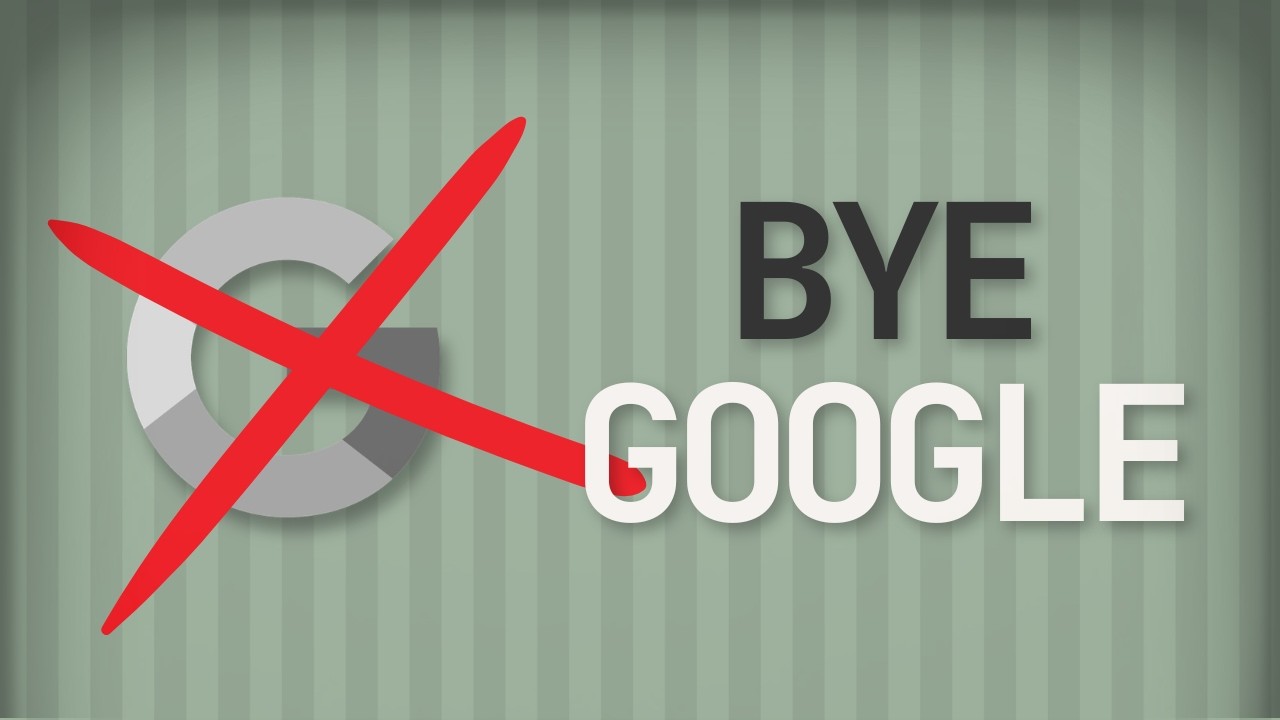
Here are three thumbnail concepts I put together for the YouTube video. Each one tries to capture a different angle of the story – from the frustration with big tech to the satisfaction of building something yourself.
1. “Bye Google” – A bold, almost rebellious farewell to the Google ecosystem. The design uses a stark contrast between Google’s signature blue and a warm, human‑centred colour palette to symbolise the break.
2. “Ditch Google” – A more direct, action‑oriented take. The typography is punchy, and the composition centres on the idea of leaving behind convenience for ownership.
3. “Self Hosting Wins” – A celebratory, geeky design. A retro wallpaper vibe with a clear victory message – this one’s for the homelab enthusiasts.
Links